11 Nov
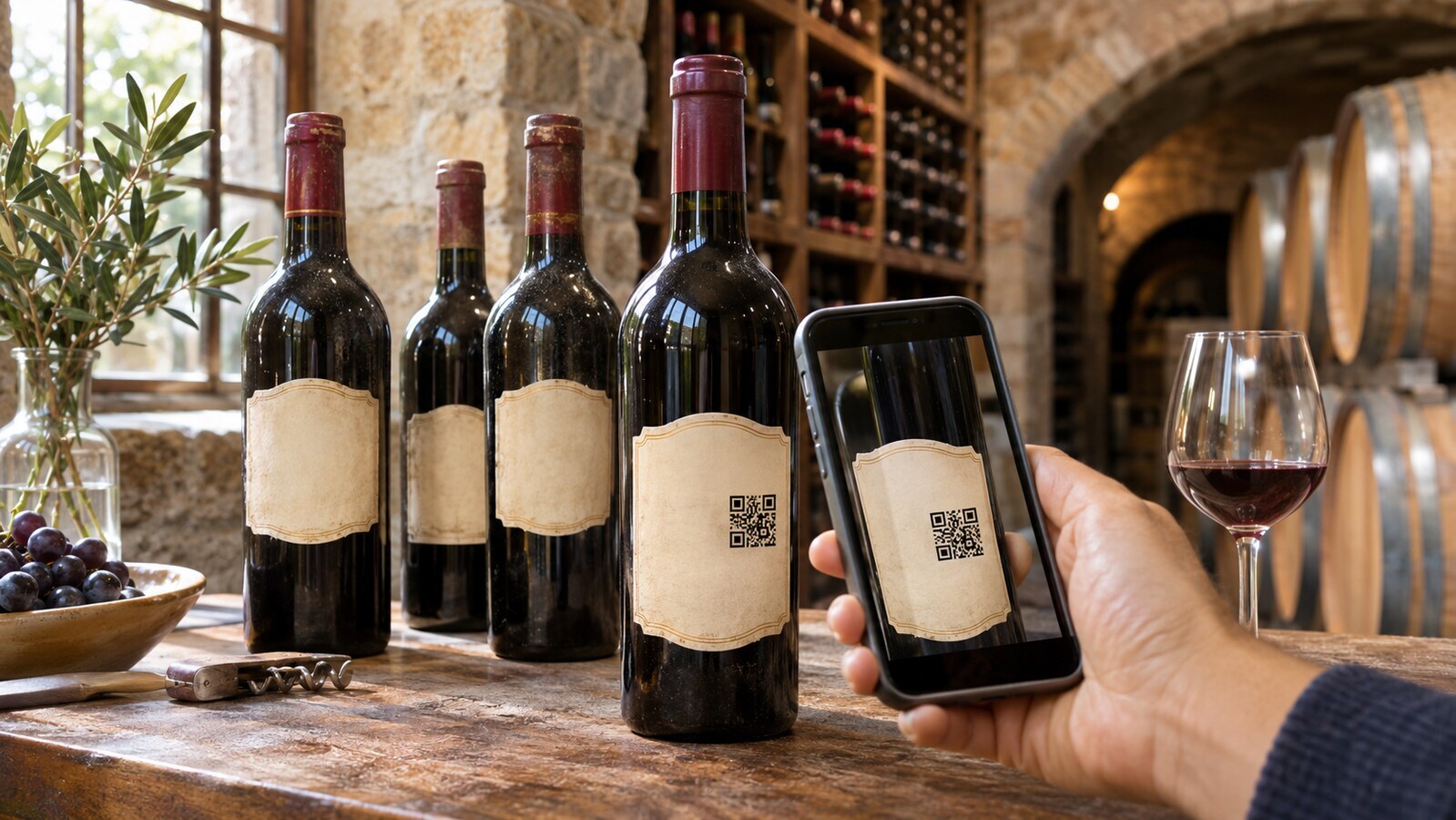
The short answer
If your wine was produced before 8 December 2023, you don't have to add an ingredient list or nutrition declaration to sell it. The transition rule lets you keep the previous labelling until that stock is sold through. Wine produced from that date onward falls under the new rules, and that's where QR-code e-labels become relevant.
This is one of the questions we get most often from producers planning next year's bottling runs, especially cooperatives sitting on mixed-vintage stock in the same warehouse.
What the regulation actually says
Regulation (EU) 2021/2117 amended Regulation (EU) No 1308/2013 and introduced the wine-sector requirements for a nutrition declaration and a list of ingredients. The relevant labelling changes apply from 8 December 2023.
A corrigendum to that regulation clarified the transition point directly: wine produced before 8 December 2023 may continue to be placed on the market under the previous labelling requirements until stocks are exhausted.
In practice, this means the date that matters is the date of production, not the date of bottling, labelling, sale, or export. A wine made in September 2023 and bottled in 2024 still falls under the old rules if production (not bottling) happened before the cutoff. If you're unsure which date applies to a specific batch, that's a question for your national wine authority or your usual legal advisor, not something this article can settle for you.
The two regulations work together:
- Regulation (EU) No 1308/2013, Article 119 sets out the compulsory particulars for wine, including the nutrition declaration and the list of ingredients, and allows both to be provided electronically under certain conditions.
- Regulation (EU) 2021/2117 is the amending regulation that introduced this requirement into the wine sector and set the 8 December 2023 application date, with the corrigendum confirming the transition rule for existing stock.
Why this matters for mixed inventory
Many producers aren't dealing with a clean cutoff. A cellar might hold:
- Wine produced and bottled before December 2023, already labelled and sitting in a warehouse.
- Wine produced before the date but bottled afterward, still eligible for the old rules.
- Wine produced after 8 December 2023, which needs the new compulsory particulars, with ingredients and the full nutrition declaration available electronically if you choose that route.
Keeping track of which bottles fall into which category matters for relabelling decisions, export paperwork, and planning when to start generating e-labels for next year's production. It's worth building this into your annual planning rather than figuring it out label by label.
What changes once a wine falls under the new rules
For wine produced from 8 December 2023 onward, the ingredient list and the full nutrition declaration can be provided electronically, identified on the package or attached label, subject to conditions set out in Article 119(4)–(5):
- The electronic nutrition declaration or ingredient list must not be displayed with information intended for sales or marketing purposes.
- User data must not be collected or tracked on that electronic page.
- Allergen and intolerance particulars required under the food-information rules must stay directly on the package or attached label, even when the rest of the ingredient list is electronic.
- If the full nutrition declaration is provided electronically, the physical label may limit its on-pack nutrition information to the energy value.
None of this applies retroactively to stock that qualifies under the transition rule. You're not required to add a QR code to wine that already complies under the previous labelling regime.
What EU-Label provides, and what it doesn't decide for you
EU-Label doesn't determine whether a specific batch qualifies for the transition rule. That's a factual and legal question tied to your production records and, where relevant, your national authority's guidance.
What EU-Label does is give you a place to prepare e-labels for the wines that do need them, so that when a batch moves from "old rules apply" to "new rules apply" (a new vintage, a new production run), you're not starting from scratch:
- Product data you enter once can be reused across labels, so adding ingredient and nutrition information for a new vintage doesn't mean retyping everything from the previous one.
- QR codes are generated following the GS1 Digital Link standard.
- The e-label pages carry no cookies and no tracking, in line with the restriction on collecting user data for the mandatory ingredient and nutrition disclosure.
- Pricing is based only on new labels created per year, from €4.00 to €1.50 per label depending on volume, prices final with no VAT added. Labels already created stay active as long as the subscription is active.
If part of your portfolio is still moving through pre-December-2023 stock and part is already under the new rules, you can set up e-labels only for the wines that need them, and bring the rest in later as old stock sells through.
Getting ready for the next production run
If harvest is behind you and new vintage labels are being prepared, this is a reasonable moment to sort your inventory by production date and flag which batches will need an e-label once they're in packaging. That avoids a scramble closer to bottling.
A few practical steps:
- List upcoming production runs and mark which ones fall after 8 December 2023.
- Decide early whether the ingredient list and nutrition declaration will go on the electronic page or, where space allows, directly on the label.
- Keep allergen information on the physical label regardless of which route you choose for the rest.
Start preparing your e-labels
If you have wines moving into the new labelling requirements, now is a good time to set up your product data once and reuse it across future vintages. Create your first label at eu-label.info or write to contact@eu-label.info with questions about your specific situation.



 EN
 RO
 FR
 IT
 ES
 DE
 HU
 SK
 CS