01 OK T
The short answer
A GS1 Digital Link QR code is a QR code built on a web-standard structure so that one code can point to more than one type of information: the compliance page a consumer needs, and potentially other data a retailer or distributor scanner needs. For a producer, the practical question is simpler: does the QR code on the bottle lead to a page that actually satisfies Article 119, and will that code still work if you change label supplier later.
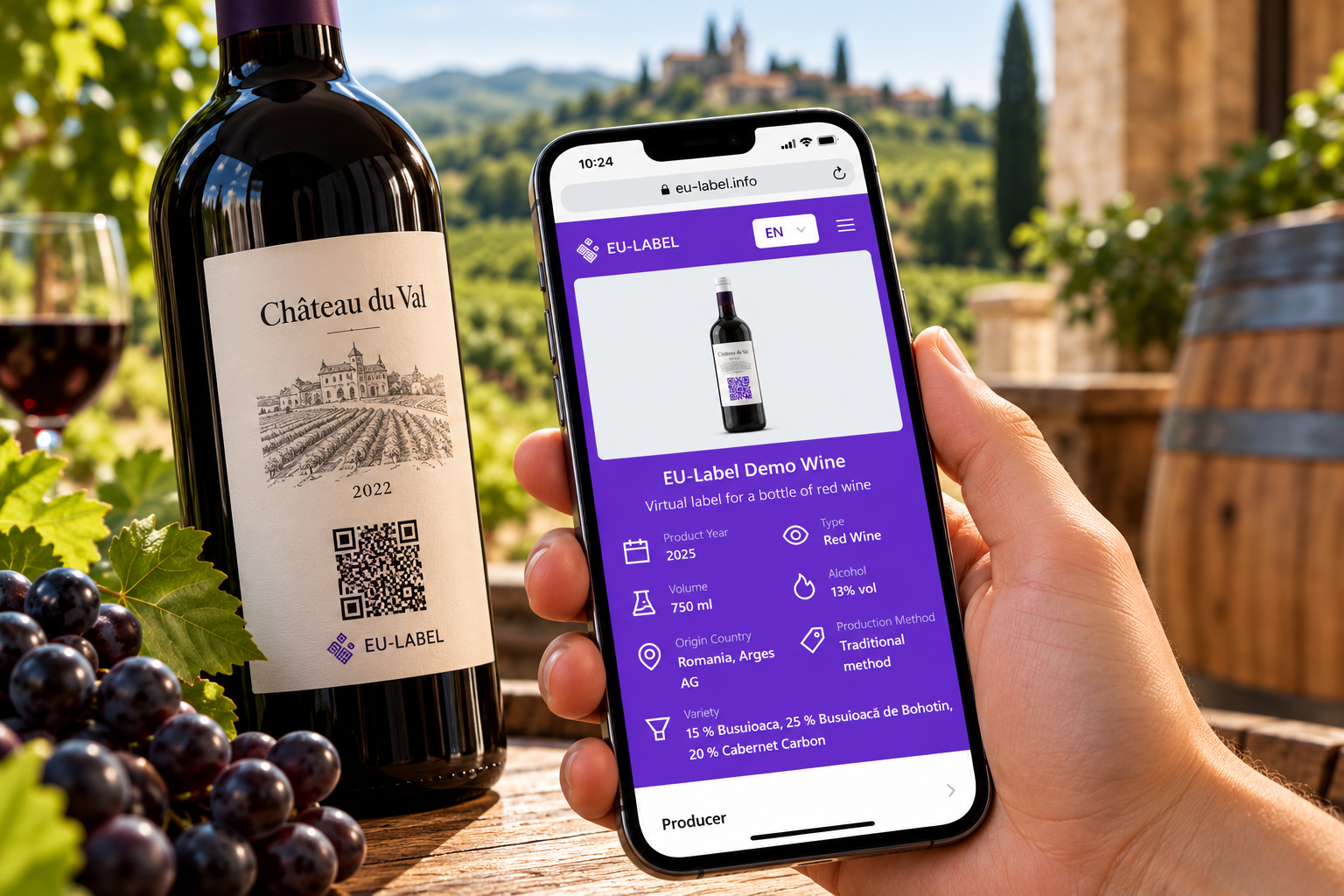
EU-Label generates QR codes according to the GS1 Digital Link standard for every product created on the platform. This section explains what that means in practice, separate from what the wine e-label regulation itself requires.
What Article 119 requires from the code, and what it doesn't
Regulation (EU) No 1308/2013, Article 119(4)-(5), allows the full nutrition declaration and the list of ingredients to be provided by electronic means identified on the package or label. The regulation does not specify a particular QR standard, symbol format, or code structure. It sets conditions for the page the code leads to:
- the ingredient list and the full nutrition declaration must not be displayed with sales or marketing information;
- user data must not be collected or tracked for these disclosures;
- allergen information required under the food-information rules stays on the physical package or attached label regardless of what the QR code shows;
- where the full nutrition declaration is given electronically, the physical label may limit on-pack nutrition information to the energy value.
So the law governs the destination page, not the code itself. A producer could technically use any QR format and still meet these conditions, provided the linked page respects them. The choice of GS1 Digital Link is a technical and commercial decision, not a legal obligation under Article 119.
Why GS1 Digital Link anyway
GS1 Digital Link is a structure that encodes identifiers (like a GTIN) into a standard web URL format, rather than a proprietary short link. Practically, this has a few consequences worth knowing before you commission label artwork:
- One code, multiple uses. The same underlying identifier structure can, in principle, support both the consumer-facing e-label page and other uses further down the supply chain, such as scanning at a retailer or distributor, without needing a second code on the label.
- Not tied to one platform's link format. Because the structure is a published standard rather than a private redirect scheme, it reduces the risk of a code becoming meaningless if you switch software providers, since the identifier logic is portable.
- Recognisable by scanning systems that support the standard. Retail and logistics systems that are built to read GS1 Digital Link codes can interpret the identifier correctly, which matters more as e-labelling becomes standard practice across categories, not just wine.
None of this changes what has to be on the page behind the code. It affects how durable, portable, and interoperable the code itself is.
What to check before you print
Whether you build a QR system yourself or use a platform, a few practical points are worth confirming before the labels go to print:
- Does the code point to a stable link? If the destination changes (new domain, new provider), does the code still resolve, or do you need to reprint labels? EU-Label's commercial offer states that QR codes can be redirected to the producer's own website or another provider if you change providers later, so the physical label does not need reprinting for that reason.
- Does the linked page keep marketing separate from the mandatory information? A page that mixes tasting notes or promotional copy into the ingredient list or nutrition declaration area does not fit the conditions in Article 119.
- Does the page avoid tracking on the mandatory sections? No cookies, no user data collection tied to viewing the ingredient list or nutrition declaration.
- Is the allergen statement still physically on the label? Moving the ingredient list to the e-label does not move the allergen declaration; that stays on the package under the food-information rules referenced alongside Article 119.
- Is the code readable at the printed size? A GS1 Digital Link URL is usually longer than a short redirect link, so print resolution and label space both matter for scan reliability.
What EU-Label provides
EU-Label generates a QR code for each product/e-label following the GS1 Digital Link standard, and creates a dedicated web page for that product. The mandatory-information areas (ingredient list, nutrition declaration) are kept separate from any commercial or catalog content, in line with the conditions above. Scans are unlimited under the subscription, and the underlying link can be redirected if you later move the page elsewhere, which matters if you ever change providers without wanting to reprint stock. Pricing is per new label created in a subscription year, from €4.00 down to €1.50 per label depending on volume, prices final, no VAT added.
This is a technical implementation detail within a broader compliance picture. It does not replace checking that your specific product, market, and label content meet the applicable rules for your situation.
A quick mental checklist for your next print run
- Confirm what the code needs to carry: ingredient list, nutrition declaration, or both.
- Confirm the destination page separates mandatory disclosure from any marketing content.
- Confirm the page collects no user data on the mandatory sections.
- Confirm allergens remain on the physical label.
- Confirm the code format won't strand you if you change software or website later.
Get started
If you're setting up e-labels for a new vintage or a first export batch and want to see how the QR generation and product page work in practice, create your first label at eu-label.info or write to contact@eu-label.info with a question about your specific labels.



 SK
SK  EN
EN  RO
RO  FR
FR  IT
IT  ES
ES  DE
DE  HU
HU  CS
CS